

During a long and excellent day at The Prado Museum in Madrid, walking alone through rooms and rooms of artists’ labour, a penny dropped. To be precise, it was in the museum cafe, where I sat, dazed by the quality and quantity of what was on show.
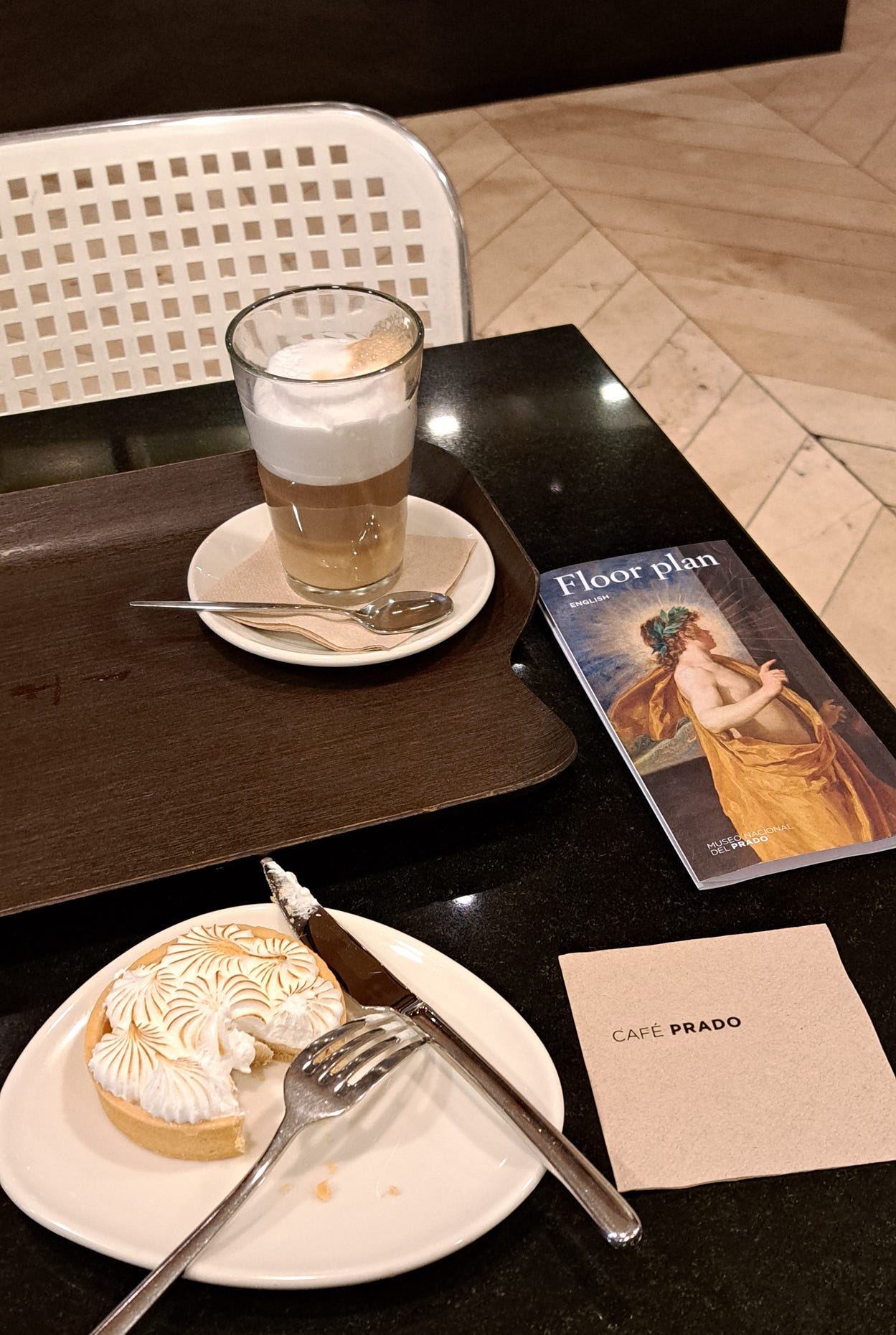
You’re not allowed to take photos in The Prado. I was grateful for this by the end. It helped me be present to the paintings, trying to sear them into my memory. The only better way I know of learning directly from the canon is to physically copy.
I guess that before cameras, this conscious searing (and copying) was what artists did on their research trips. Poor Velázquez was only let out of the Madrid palace twice to go to Italy, where he copied Tintoretto, Raphael, Michaelangelo… trips that levelled up his studio and painting practice.
I go to galleries to get fuel in my creative tank from the art on display. To see the brushstrokes, colours, and scale of artworks that can’t be appreciated via books or screens. In Madrid I wanted to tap into the inspirational ideas and expressive compositions of big hitters - Velazquez, Caravaggio, Rembrandt, and their ilk. But the big hitters came ‘with benefits’.
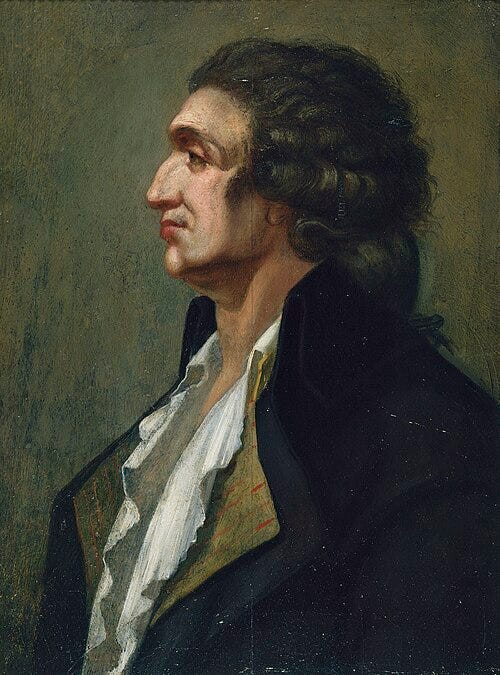
Looking at the historic collections in Spain, I sensed the <insert collective noun> of artists working in parallel, and through time. I felt part of a continuum - learning from each other, competing, consolidating, breaking new ground and representing our era. All drinking from, and pouring into, the same infinite swirling pool. The concept of an infinite pool isn’t new or original - see Marquis de Condorcet’s Sketch for a Historical Picture of the Progress of the Human Mind
Scientists, authors, composers, entrepreneurs - whatever and however we ‘make’, ideas that were born long ago crystalise in the moment, and continue to evolve after the paint is dry. The ideas aren’t unique or original, but clutched and ordered by someone, and set down to the best of their ability. A relatively tiny individual perspective, a bleat into the wind, from their era to the future.
Chewing over what I saw, it struck me that people engage with the pool in specific ways:
Trailblazers pour in a technical advance (Seurat’s optical mixing, Brunelleschi’s linear perspective), a conceptual approach (Emin’s confessional work, Monet’s series of a single subject in different lighting - haystacks/Rouen Cathedral) or a new audacious visual language (Hilda af Klimt, Hieronymous Bosch, L.S. Lowry). They resist stylistic smoothing by peers and audience, obsessively forging their work on a private beach on the edge of the pool. They throw in big rocks, making conspicuous changes to the landscape, causing infinite ripples. In the Reina Sofia I was surprised to see Dali’s transition laid out from realism via cubism to surrealism.


Dali - realism to cubism to surrealism Anyone creative builds on, and contributes to, the ideas in the pool in some way. For me that is the definition of creativity. Sometimes, when quoting the work of others, artists accede to the moral obligation to give credit. Seeing Picasso’s Guernica in the Reina Sofía museum, I was immediately struck by his brilliant sampling and recontextualising of Kollwitz’ “Woman with a dead child”. There is no record of him acknowledging this:
Some artists simply try to paint like their heroes, contemporary or historic. They drink from the pool, hopefully enhancing the lives of themselves and others. Sometimes they develop beyond imitation. There were several artists doing master copies in The Prado. I got the impression their motives were both to sell (the one I spoke to told me he was working “on commission”) and to learn. There are some interesting small preliminary studies of large paintings on permanent display, and of course many artists make several versions of their own subjects, developing and refining technique and ideas.


It was also interesting to see paintings dating back to the times when it was normal for several artist to work on one painting, in a workshop context.
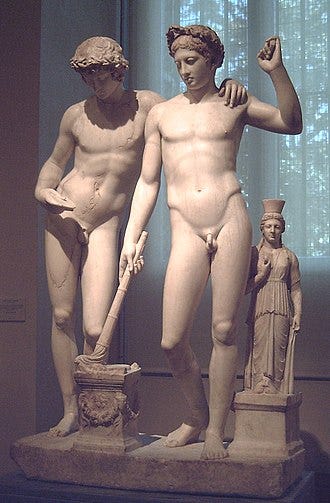
Some artists are successful for reasons not of quality, but of privilege or personality. To the horror of discerning peers, they disperse gallons of effluent into the pool. High profile figurative public works, commissioned at great expense by indiscriminate institutions. These sculptures and paintings are installed in cities, headquarters, and football stadiums as an embarrassing reflection of nepotism and the artistic deficit of the era. I won’t sullying this journal with photos. But they will persist, just as fantastic Roman sculptures have:

Castor and Pollux 1AD Artists whose legacy is tarnished with personal toxicity (Eric Gill, Gaugin, Picasso, Freud) still (in my view) leave valid and useful contributions in the pool. For my own sanity, I generally choose to ignore work where the toxicity is blatantly evident in it. Rape of the Sabines, anyone? But there may still be useful lessons to be taken from it, so…
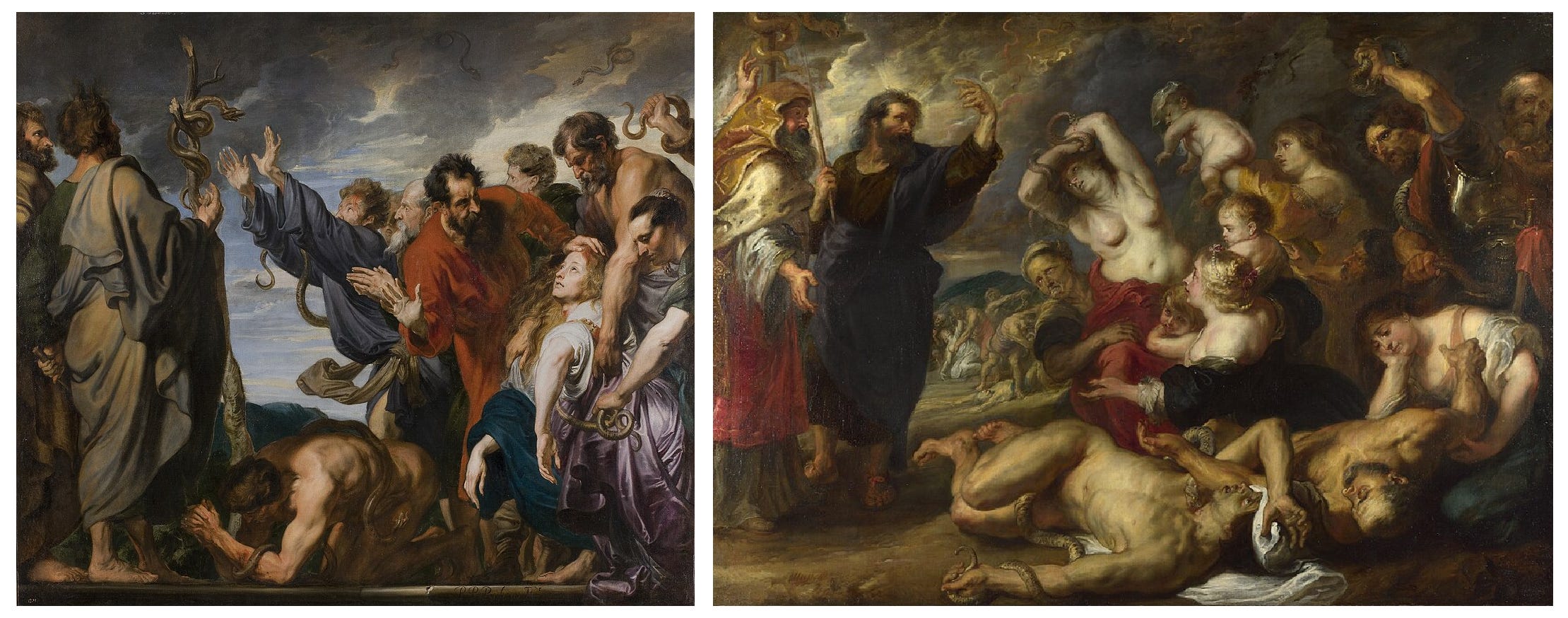
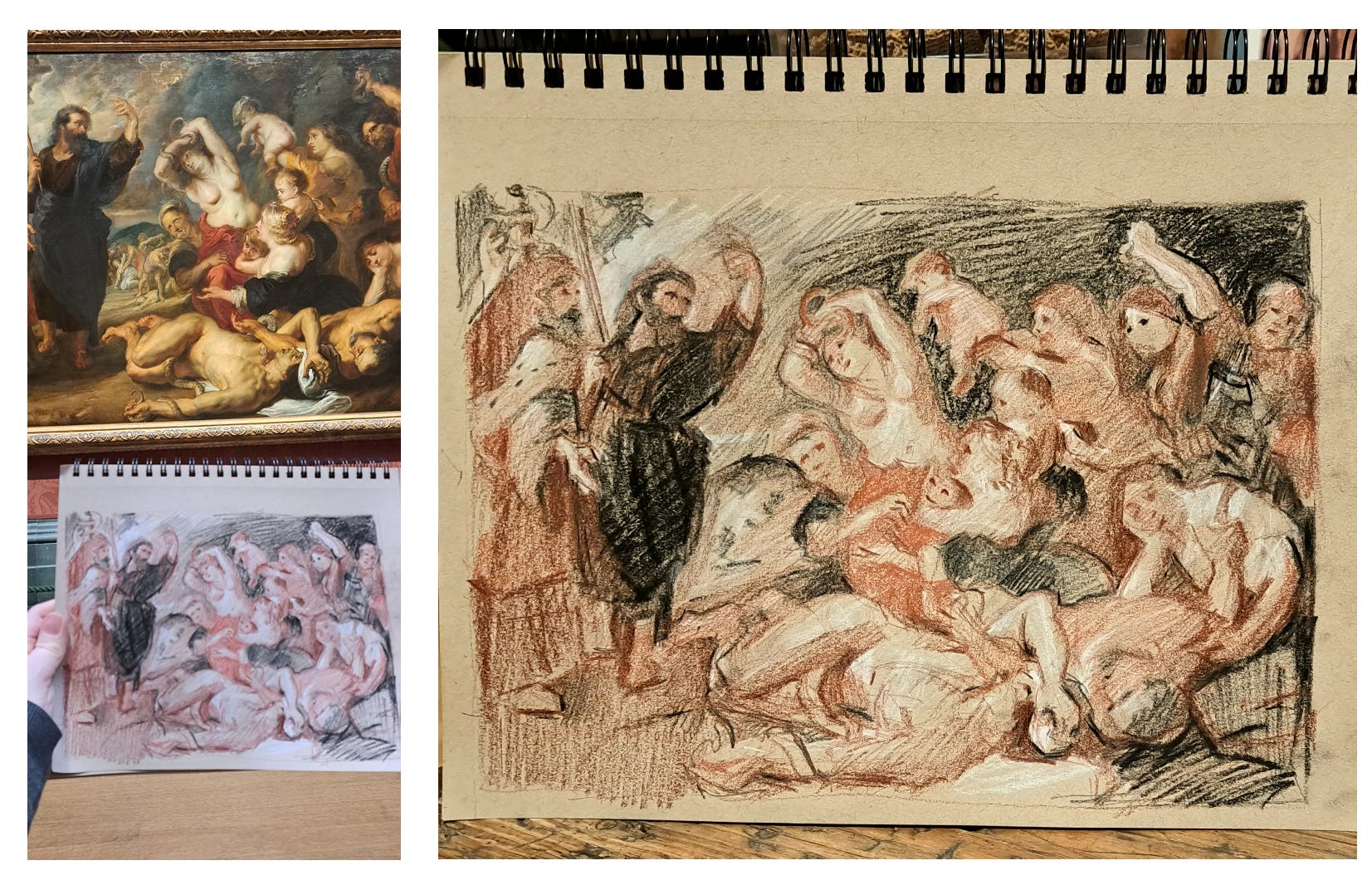
Teachers show people the pool, and ways to engage with it. They enable the next generation to break new ground and ultimately to contribute. I enjoyed seeing Van Dyke’s version of the Brazen Serpent story in The Prado. It jumped across the room at me, because I had spent time in The National Gallery in London copying one of Rubens’ versions of this, and enjoyed tracing the similarities and variations between student and teacher.
Art societies, galleries and collectors build the landscape around the pool. That can be the plumbing (channels, taps and drains to and from the pool), pathways to follow, and water features to highlight excellence.
Doing master copies
Out of interest, I enquired at The Prado - you can do copies in person by prior appointment:
They provide easels
You bring all materials
There is a max size you can produce, it must be slightly different to the original.
You have to specify a single piece to copy
There are a few old masters you aren’t allowed to copy.
This added an extra layer of excitement to my visit, as I fantasised about doing it, and assessed the best pictures to target for copying: Interesting compositions and subjects, together with logistics (not on the top floor, not in high traffic areas, near the cafe) were factors. Here are my top 3 contenders:
For drama, composition, light, and the value of having lower key people not doing much, to balance the drama.

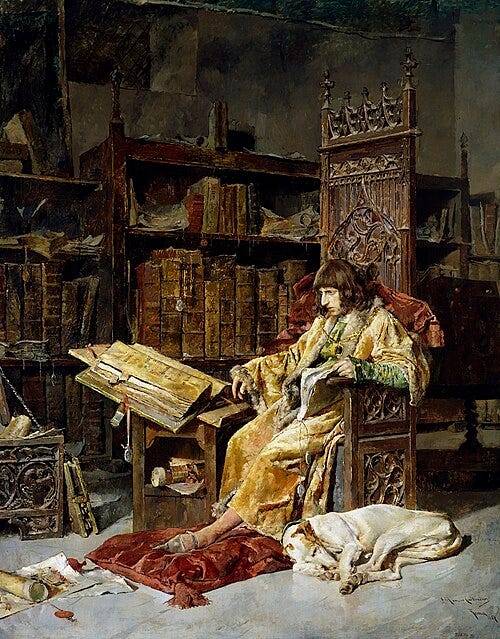
The intellectual prince, in exile, disinherited by his father. Such a masterful depiction of a really unusual subject. Despite the opulence, it seems to capture the ennui and wasted talent of exclusion and captivity:
Rubens’ control of shadow on the face. The speed and fluency of execution. The void of black, a feast of lost edges and compressed tones, at both extremes, driving the focus to face and hands:
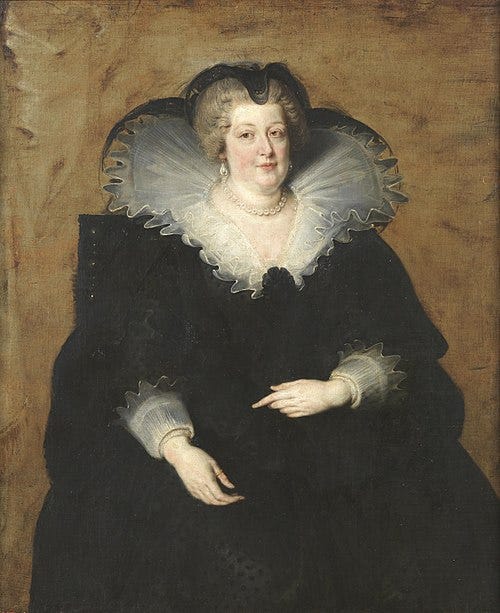
Maria’s statuesque figure (undiminished by being seated) reminds me of Pietro Annigoni’s painting of Queen Elizabeth II (painted the year I was born, 1969):
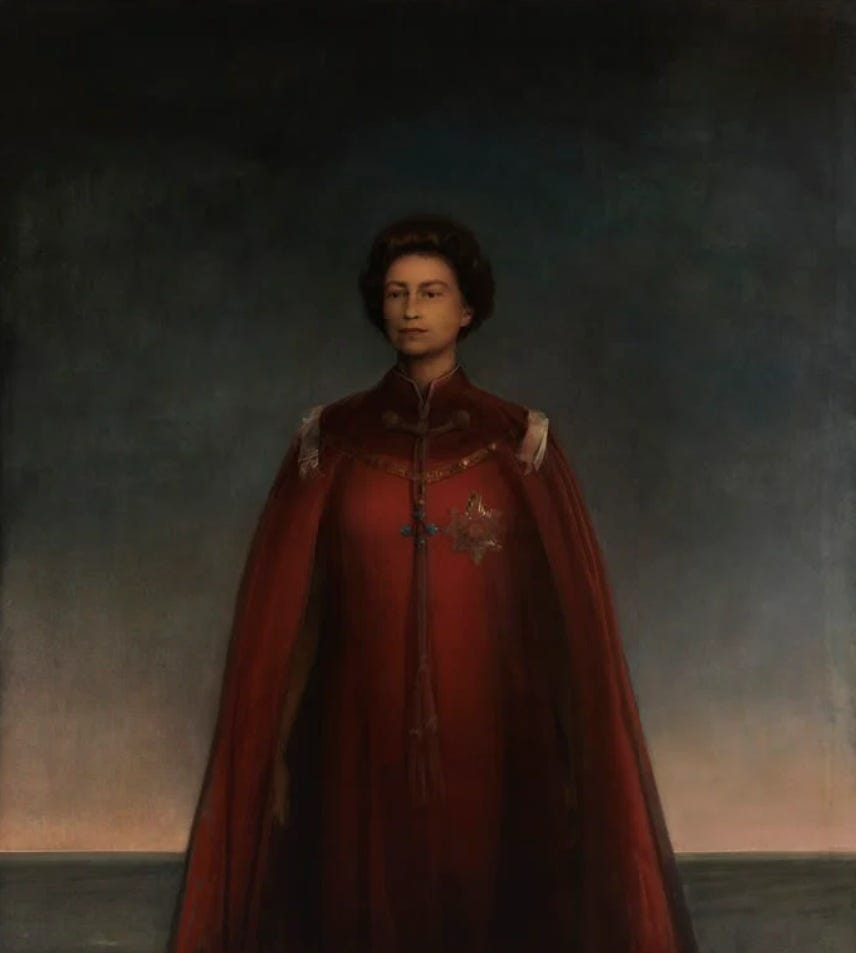
Annigoni went a step further and subjugated even the hands. Now THAT is how to paint a monarch in red.
On arriving home I started to think about how a contemporary artist might engage with ‘the pool’ during the course of a project. To be continued in a future journal…